
Why Building Muscle Is Essential for Mobility, Balance, Pain Reduction, and Longevity
Strength Training After 55 Is a Health Necessity
Strength training after the age of 55 is no longer optional—it is one of the most effective ways to preserve independence, mobility, and long-term health. As we age, muscle mass naturally declines, joints become less stable, and balance and reaction time diminish. Without targeted intervention, everyday activities such as standing up, climbing stairs, or carrying groceries become progressively more difficult.
At Redefine Fitness, senior strength training is designed to support how the body actually ages. Rather than generic workouts or high-intensity routines that ignore joint health, our programs focus on restoring functional strength, improving movement quality, and reducing pain through structured, personalized resistance training. The goal is not aesthetic results or extreme lifting, but helping adults over 55 move better, feel stronger, and remain independent for years to come.

Why Strength Training Becomes Critical After Age 55
Age-Related Muscle Loss and Functional Decline
Beginning in early adulthood, muscle mass gradually declines. After the age of 55, this process accelerates and directly impacts strength, balance, coordination, and metabolic health. If muscle loss is left unaddressed, it increases the risk of falls, joint pain, reduced mobility, and loss of independence.
Strength training is the most effective tool for slowing—and often reversing—these changes. When muscles are exposed to appropriately applied resistance, the body adapts by rebuilding strength, improving coordination, and reinforcing joint support. These adaptations occur at any age when training is structured and progressive.
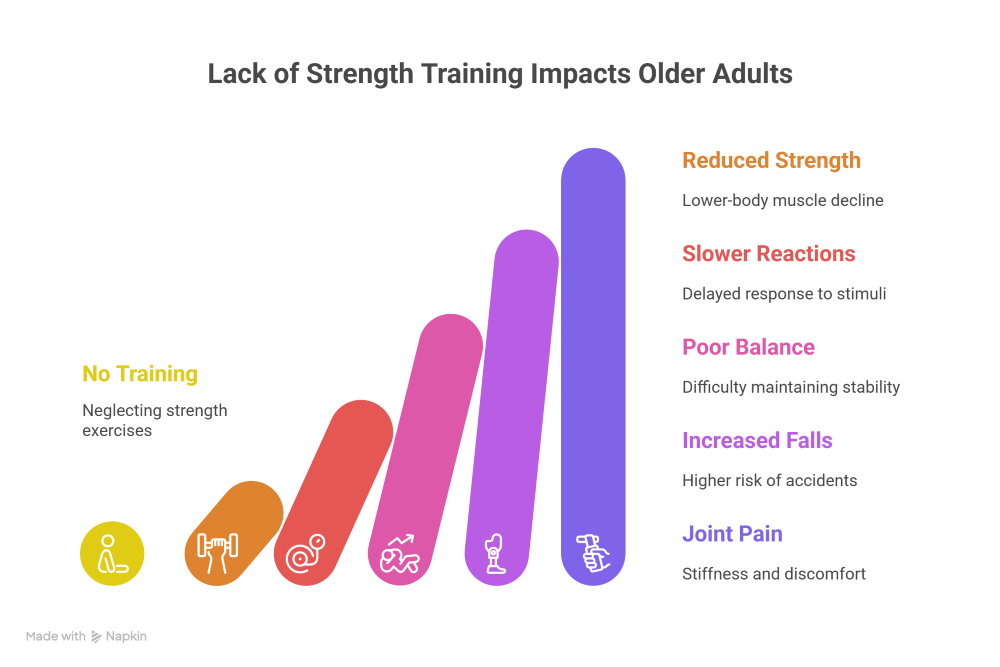
Common consequences of not strength training after 55 include:
- Reduced lower-body strength
- Slower reaction times
- Poor balance and coordination
- Increased fall and fracture risk
- Greater joint pain and stiffness
Why Cardio Alone Is Not Enough
Walking, cycling, and swimming are excellent for cardiovascular health, but they do not provide sufficient stimulus to preserve muscle mass, bone density, or joint stability on their own.
Strength training delivers benefits that cardio cannot:
- Maintains and rebuilds muscle tissue
- Improves joint alignment and stability
- Enhances posture and movement efficiency
- Strengthens the nervous system’s control of balance
For adults over 55, cardio supports heart health—but strength training protects independence.
Core Benefits of Senior Strength Training
Physical Benefits
- Increased muscle strength and endurance
- Improved posture and walking mechanics
- Greater joint stability and control
- Reduced risk of falls and injuries
Functional Benefits
- Easier transitions from sitting to standing
- Safer stair climbing and daily movement
- Improved grip strength for everyday tasks
- Greater confidence in physical ability
Health and Longevity Benefits
- Improved insulin sensitivity
- Reduced risk of osteoporosis
- Better blood pressure regulation
- Lower overall mortality risk
These benefits build over time, reinforcing the systems that allow older adults to move efficiently, stay upright, and remain active.
Strength Training, Balance, and Fall Prevention
Falls are the leading cause of injury among older adults. Balance is not just a skill—it is the result of strength, coordination, and nervous system efficiency.
Strength training improves balance by:
- Strengthening the muscles responsible for standing and walking
- Improving core stability and posture control
- Enhancing body awareness and coordination
- Increasing reaction speed during unexpected movements
Rather than relying solely on balance drills, structured strength training naturally improves balance by strengthening the systems that keep the body stable.
Strength Training for Joint Health and Pain Reduction
Many adults avoid strength training due to arthritis or joint discomfort, yet properly designed resistance training often reduces pain rather than causing it.
Strength training supports joint health by:
- Strengthening muscles that protect and stabilize joints
- Improving joint alignment and movement mechanics
- Reducing excessive stress on cartilage and connective tissue
- Increasing usable range of motion
When joints are supported by strong, coordinated muscles, everyday movement becomes smoother and more comfortable.
Safety First: How Strength Training Should Be Done After 55
Strength training for seniors must be approached differently than general studio programs. Safe and effective programs emphasize:
- Controlled movement and proper technique
- Gradual progression over time
- Joint-friendly exercise selection
- Adequate recovery between sessions
The goal is not maximal effort, but consistent, sustainable improvement that supports long-term health.
Why Coaching and Personalization Matter
One of the most common reasons seniors struggle to maintain a fitness routine is lack of structure and guidance. Personalized coaching ensures that:
- Exercises match individual ability and limitations
- Technique is monitored to reduce injury risk
- Progress is adjusted based on recovery and comfort
- Pain and fatigue are addressed proactively
Education and accountability play a major role in consistency, which is the most important factor in long-term results.
What a Proper Senior Strength Training Program Should Include
An effective program for adults over 55 prioritizes function, safety, and long-term progress.
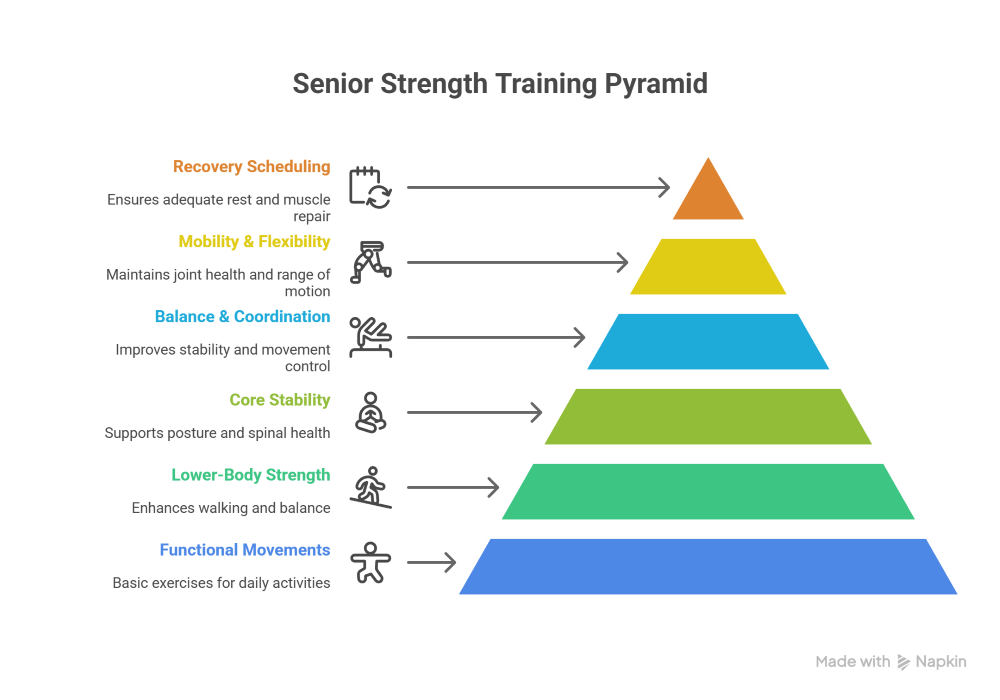
Core components include:
- Functional movement patterns (squats, hinges, pushes, pulls)
- Lower-body strength for walking and balance
- Core stability for posture and spinal support
- Integrated balance and coordination training
- Mobility and flexibility for joint health
- Recovery-focused scheduling
Every exercise should directly support daily movement and injury prevention.
Why One-on-One Personal Training Is Ideal After 55
Individualized training allows sessions to adapt based on:
- Daily energy levels
- Joint comfort and mobility
- Recovery status
- Movement quality
This flexibility is essential for long-term adherence and consistent progress.
Common Myths About Strength Training for Seniors
“I’m too old to start lifting weights.”
Strength improvements occur at any age with proper programming.
“Strength training will damage my joints.”
When properly coached, strength training often reduces joint pain.
“Walking is enough exercise.”
Walking supports cardiovascular health but does not preserve muscle or balance.
Conclusion: Strength Is an Investment in Independence
Strength training after 55 is one of the most powerful tools for maintaining mobility, reducing pain, and preserving independence. By building muscle, supporting joints, and improving coordination, older adults can lower fall risk and continue living actively well into later years.
With individualized programming and professional guidance, strength training becomes safe, effective, and sustainable—helping adults over 55 move with confidence and maintain their quality of life.
- Learn more or schedule an assessment today.
- 👉 Get Started
FAQs
Is strength training safe after age 55?
Yes. Strength training is safe for adults over 55 when exercises are properly selected, coached, and progressed. Programs should emphasize controlled movement, joint-friendly ranges of motion, and gradual increases in difficulty rather than maximal effort. When done correctly, strength training reduces injury risk rather than increasing it.
How often should adults over 55 strength train?
Most adults over 55 benefit from strength training 2–3 times per week. This frequency provides enough stimulus to improve strength and balance while allowing adequate recovery between sessions. Training more often may be appropriate for some individuals when volume and intensity are carefully managed.
Can strength training improve balance and reduce fall risk?
Yes. Strength training improves balance by strengthening the muscles responsible for standing, walking, and stabilizing the body. It also enhances coordination, posture, and reaction time—key factors in fall prevention. For many older adults, improving strength is more effective for balance than practicing balance drills alone.
Will strength training help with joint pain or arthritis?
In many cases, yes. Properly designed strength training often reduces joint pain by strengthening the muscles that support and protect joints. Improved muscle balance and joint alignment can decrease stress on cartilage and connective tissue, making daily movement more comfortable.
Do I need previous coaching or exercise experience to start?
No prior experience is required. Senior strength training programs are designed around your current ability, movement limitations, and comfort level. Exercises can be modified or regressed as needed, making strength training accessible even for those who are new to exercise or returning after a long break.
Is strength training better than cardio for seniors?
Strength training and cardio serve different purposes. Cardio supports heart and lung health, while strength training is essential for preserving muscle mass, balance, and independence. For adults over 55, strength training is critical for maintaining functional ability and preventing age-related decline.
How long does it take to see results from strength training?
Most adults notice improvements in strength, stability, and confidence within 4–6 weeks of consistent training. Pain reduction and improved movement quality often occur even sooner. Long-term benefits continue to build with ongoing participation.
Can strength training help with posture?
Yes. Strength training improves posture by strengthening the muscles that support the spine and shoulders. Improved posture can reduce neck, back, and shoulder discomfort and make daily movements more efficient and less fatiguing.
What types of exercises are included in senior strength training?
Programs typically include functional movements such as squats, hinges, pushes, pulls, and carries. These exercises are chosen because they directly support everyday activities like standing, walking, lifting, and reaching. Balance, mobility, and flexibility work are often integrated into sessions.
Should I work with a personal trainer after age 55?
Working with a qualified personal trainer is highly recommended for adults over 55. Personalized coaching ensures exercises are performed safely, progression is appropriate, and individual limitations are addressed. One-on-one guidance also improves consistency, which is the most important factor in long-term success.
Ready to Take the Next Step?
Strength training after 55 plays a key role in maintaining mobility, balance, and independence—but the right guidance makes all the difference. At Redefine Fitness, training begins with a personalized assessment to ensure your program is safe, effective, and tailored to your needs.
- Learn more or schedule an assessment today.
- 👉 Get Started