Bone Is Living Tissue. Load It, and It Builds.
The old advice was “be careful, don’t lift.” The evidence says the opposite: bone responds to meaningful load. What actually builds bone, what to avoid, and how to do it without gambling with your spine. Built from how we coach it every day.
100+ conditions studied
1-on-1, never more than 3-5 in the studio
Everything tracked (InBody / DEXA)
The one idea that changes how you train bone
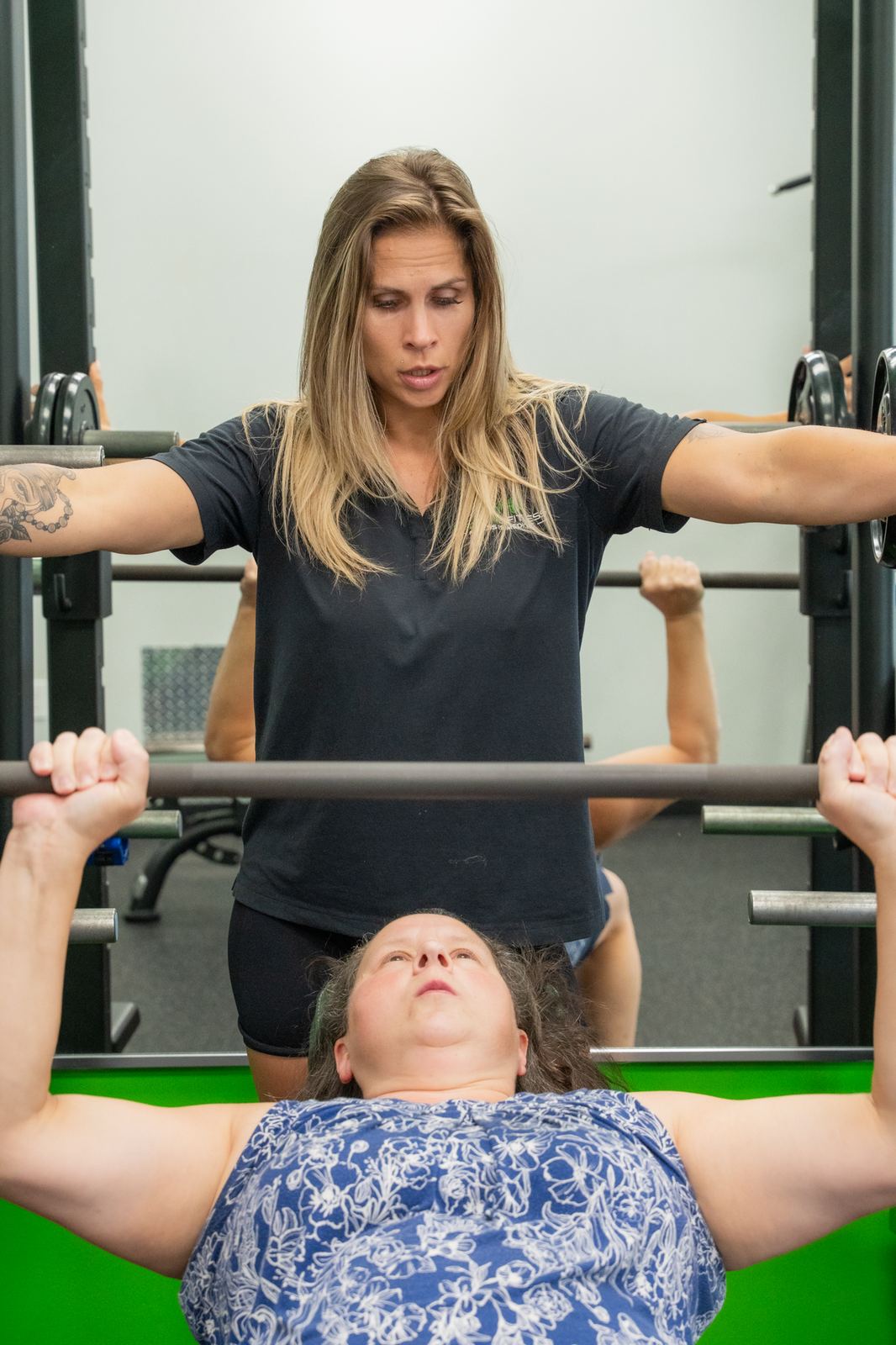
Bone is not a static scaffold. It is living tissue that constantly rebuilds itself around the demands you place on it, a principle physiologists call the mechanostat. The catch: it only adds bone when the load is high enough relative to what you’re used to. Gentle, habitual activity sits below that threshold. This is why walking, while good for you, does very little for bone density, and why meaningful resistance and impact do.
Translation: light does nothing for bone. The stimulus that builds it is challenging load applied with good technique. The fear that “lifting is dangerous for my bones” has it backwards, the right loading is the point. The skill is doing it safely, which is exactly what supervision is for.
What actually builds bone, the four levers
| Lever | Why it works | What it looks like |
|---|---|---|
| 1. Heavy resistance | High muscle pull on bone is the strongest osteogenic signal | Progressive squat, hinge, press, pull, loaded properly |
| 2. Impact / loading | Ground reaction forces stimulate the hip and spine | Stamping, heel drops, controlled hops, where appropriate for you |
| 3. Balance | Most fragility fractures happen in a fall, not falling protects the bone you build | Single-leg work, reactive stepping |
| 4. Posture / back strength | A strong, tall spine resists the forward collapse that drives vertebral fractures | Back-extensor work, hip hinge for daily lifting |
Movements to be careful with, this part matters
With low bone density, how you move under load is not cosmetic. The classic caution, supported by long-standing research, is to avoid:
- Loaded or repeated spinal flexion, rounding forward under weight (heavy toe-touches, weighted sit-ups/crunches, deep loaded rounding).
- Rapid twisting of the spine under load.
- End-range forced bending of the back.
In one classic study, a repeated spinal-flexion program was associated with a far higher rate of new vertebral fractures than an extension-based one. The fix isn’t to avoid exercise, it’s to swap those patterns for a strong, tall, hinge-based way of loading. That substitution is a core reason to do this with a professional rather than off a video.
Your working set, strong, tall, and stable
- Hip hinge, taught first. Hips back, flat and tall back, then drive up. Every time you pick something up for the rest of your life, this is the pattern that protects your spine. Master it before you load it.
- Loaded carries. Walk tall with weight in your hands. Loads the hips and spine safely and trains the upright posture that resists fractures. 3-4 walks of 20-40 steps.
- Sit-to-stand / squat pattern. Progressive lower-body strength drives hip and femoral-neck loading. 3 sets of 6-10.
- A pressing and a pulling movement. Overhead and rowing patterns load the upper spine and build the back strength that keeps you upright. 2-3 sets of 8-10.
- Back-extensor work. Gentle prone extensions, lifting the chest a few inches, to strengthen the muscles that hold your spine tall. 2-3 sets of 8-10.
- Balance and controlled impact. Single-leg holds, and, only where appropriate for you, heel drops or light stamping to add bone-loading impact. Progressed carefully.
Notice what’s not here: crunches, loaded rounding, or anything that bends the loaded spine. Everything is built around a tall, hinged, stable position.
Do this today, your first 10 minutes
Start with the pattern that protects you most:
- Chair hip-hinges, 2 × 8. Hips back to tap the seat, chest proud, flat back.
- Wall or counter push-ups, 2 × 8. Tall posture, no sagging.
- One-leg balance, 3 × 20 seconds each side. Near a counter for safety.
Ten minutes, zero risk to the spine. The point is to feel what “strong and tall” is, that position is the whole game.
How you’ll know it’s working, track these
Bone density itself changes slowly, measured on a DEXA over many months. So in the meantime, track the things that move sooner and predict the outcome:
- Strength: load on your hinge and squat trending up over weeks.
- Balance: single-leg hold time, your fall insurance improving.
- Posture: how tall and easy standing upright feels by end of day.
- DEXA: the long-game scoreboard, rechecked on your physician’s schedule.
When you train with us we log the strength and balance markers in-app and reassess on a set cadence, and we build alongside whatever your doctor is tracking on imaging. We don’t guess, we measure.
Do this with a professional, and your doctor in the loop
The trials that showed bone gains from heavy training were supervised, screened, and progressed carefully. If you have a known fragility fracture, severe osteoporosis, or specific medical restrictions, that changes what’s appropriate, talk to your physician, and bring that guidance to us. This is precisely the situation supervision exists for: the reward is real, and so is the need to do it right.
What a first month looks like with us
Every session is 1-on-1 with a Fitness Specialist. Weeks 1-2, own the hip hinge and a tall, stable spine, establish safe starting loads, screen your balance. Weeks 3-4, progress resistance, add appropriate loading and impact, layer in back-extensor and balance work. Everything is built around your health history and whatever your doctor’s imaging and guidance say. Careful is not the same as timid, we load you exactly as much as is right for you, and not a pound more.
What the evidence shows
In the LIFTMOR randomized trial, postmenopausal women with low bone mass who did twice-weekly supervised high-intensity resistance and impact training improved bone density at the spine and improved function, with a strong safety record (Watson et al., J Bone Miner Res, 2018); a companion trial in older men (LIFTMOR-M) showed similar bone gains (Harding et al., 2020). The UK consensus statement “Strong, Steady and Straight” recommends progressive resistance training to near-maximal effort, plus balance work, and avoiding repeated end-range spinal flexion, concluding that for most people the benefits of exercise outweigh the risks (Brooke-Wavell et al., Br J Sports Med, 2022). And the reason light activity does little for bone traces to the mechanostat principle: bone adapts to load above a threshold (Frost). The consistent message: load bone meaningfully, load it well, and protect the spine while you do.
Common questions
Isn’t lifting dangerous if I have osteoporosis?
Done properly, supervised, and built to you, progressive strength training is one of the most supported things you can do for bone. What’s risky is loaded spinal rounding and twisting, which is exactly what a well-built program leaves out.
Can exercise reverse osteoporosis?
We don’t make medical claims, and bone changes are managed with your physician. What the research shows is that meaningful resistance and impact training can support bone density and, just as importantly, build the strength and balance that reduce the odds of the fall that causes a fracture.
I’m already on medication for my bones. Does exercise still help?
Exercise and your medical care work on different levers and aren’t in competition. Bring your physician’s guidance and we build the training around it.
Every session at Redefine is one-on-one with a Fitness Specialist who loads you exactly right for your bones, your balance, and your history, and coordinates with what your doctor tracks. Two Long Island locations, everything tracked.
General fitness education, not medical advice. We build strength and capability; we don’t diagnose or treat. We always recommend checking with your doctor.
This is what we build programs around every day.
Want the reasoning behind this? Read the long form article: Strength Training and Bone Density.