Not a Gym. Not Therapy. The Space Between.
There’s a gap between “your doctor cleared you” and “you feel like yourself again.” A gym isn’t built for it and physical therapy has discharged you from it. Medical fitness lives exactly there. Here’s what it actually is, and how to judge anyone who claims to do it.
100+ conditions studied
1-on-1, never more than 3-5 in the studio
Everything tracked (InBody / DEXA)
The definition
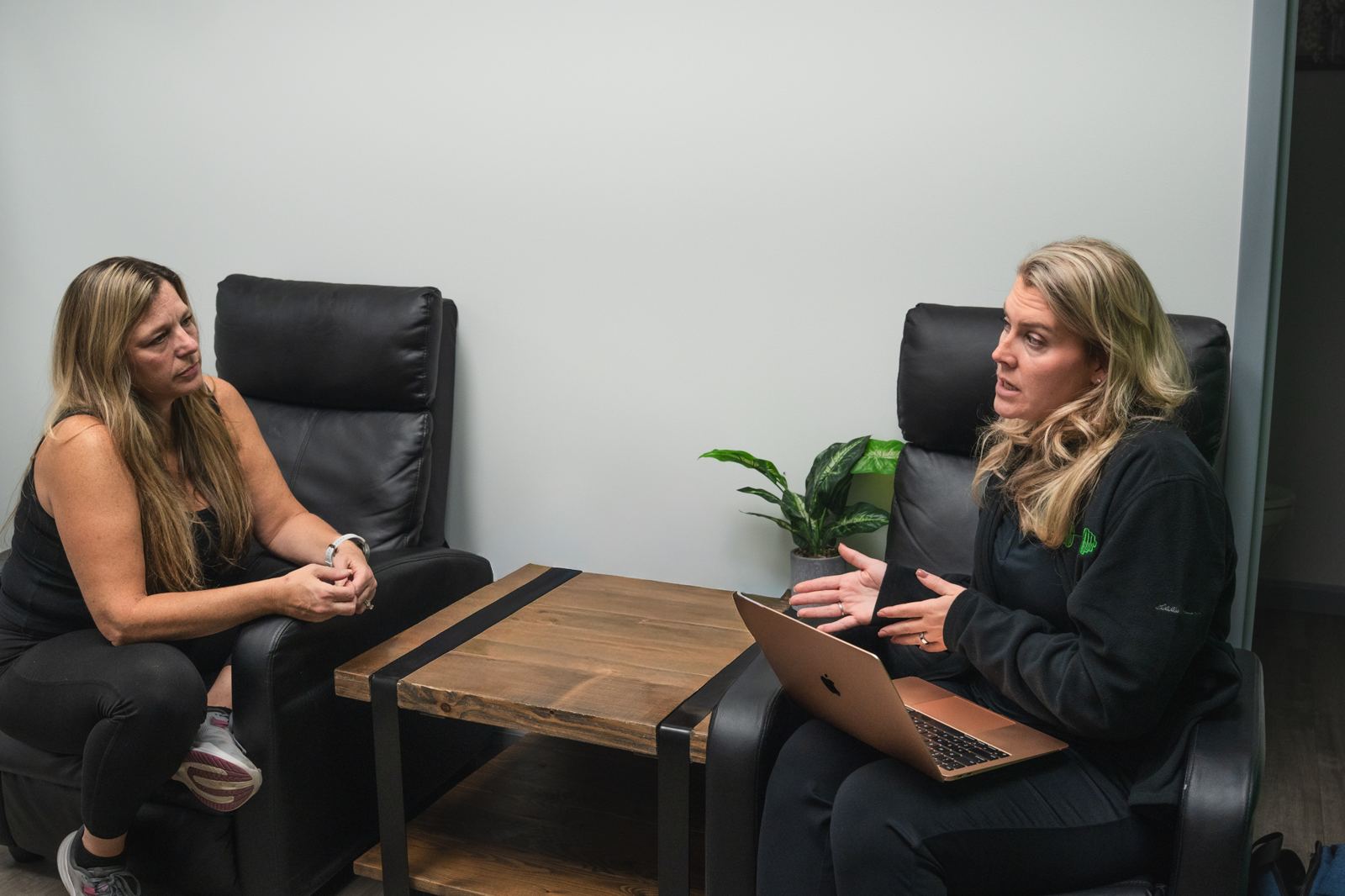
Medical fitness is the bridge between where medicine drops you off and training on your own. It takes the diagnostics and rigor of the medical world and the habit-building independence of the fitness world, and delivers what neither does alone: training built off your medical history, run with clinical standards, aimed at a longer, stronger life.
That’s the definition. Redefine Fitness wrote it — because after decades of both industries, nobody else had. The rest of this page is the case for it.
Both sides pull you in the wrong direction
Medicine is built to diagnose, prescribe, and repair — and it’s good at it. But its answer to “what comes next” is usually a discharge sheet and the word rest. The fitness industry is built to push — and it’s good at that too. But it caters to people who already know what they’re doing, gives beginners no starting point, and sells plenty that isn’t rooted in science.
Here’s the part that should bother you: we spend billions on medical research every year, and people keep getting sicker. Fitness has become one of the biggest industries on earth, and people keep getting sicker. Two industries pulling on opposite ends of the same person — and the middle, where someone actually gets healthier, belongs to no one.
We are that middle. We are that bridge.
The gap, from the inside
Last year, our founder Anthony Amen had major reconstructive surgery on his chest. The only guidance for what came next: don’t work out. Nothing about what the rest of his body could still safely do — no plan, no starting point, nothing between “rest everything” and “good luck.” When he began carefully training the muscle groups the surgery never touched, circulation improved, the pain fell from a 9 to a 3, and his recovery accelerated. Years earlier, after an injury he was told had no cure, it took him three years of deliberate, structured work to rebuild mobility that medicine said wasn’t coming back.
Neither story is medical advice — never train around a surgery or injury without your doctor’s clearance. They’re evidence of something simpler: “stop everything” is rarely a plan, and nobody in the system is paid to build you the real one. A hand injury doesn’t switch off your legs. A shoulder repair doesn’t cancel your health. Someone should be guiding what you can do — safely, progressively, on data. That guidance gap is exactly what medical fitness exists to fill.
We self-regulated because nobody else would
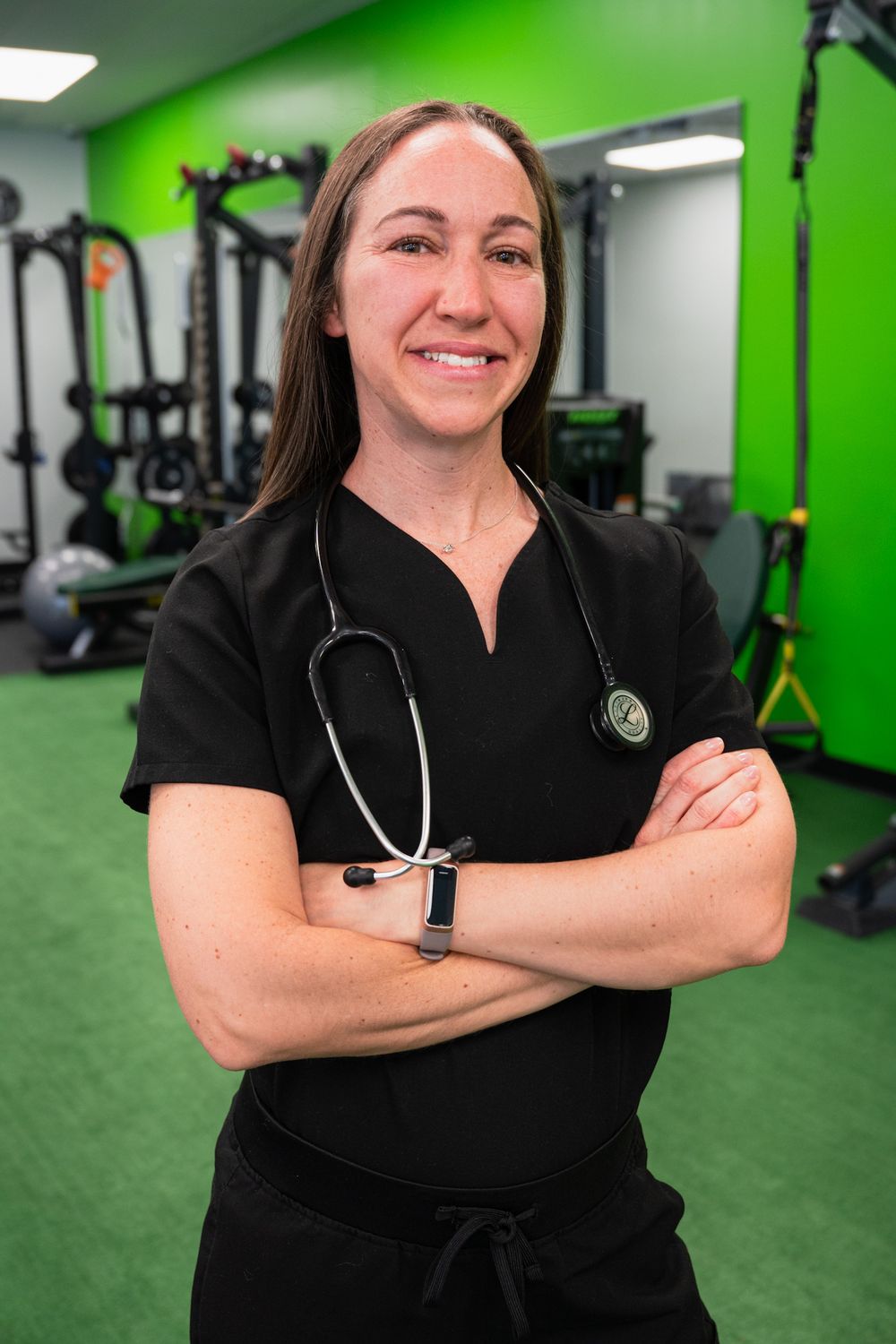
Right now, anyone can buy a personal-training certificate online from a private company and start touching bodies the next day — with nothing behind it on the medical side. We refused to accept that standard, so we built our own: we created New York State’s only Department of Labor–approved fitness apprenticeship, put a board-certified Nurse Practitioner behind our programming as Clinical Advisor, staffed a Registered Dietitian, documented 100+ medical conditions in our training standards, and close both studios every Thursday for all-staff education.
And the destination of all of it is not dependence on us. It’s independence — the habits, consistency, and confidence to run your own health for the rest of your life. We’re the bridge. You’re meant to cross it.
Where it fits, and why the gap exists
Most people bounce between two worlds that were never designed for their situation:
| A gym | Physical therapy | Medical fitness | |
|---|---|---|---|
| Built for | The already-healthy | Injury and recovery | The gap after clearance |
| Assumes | You know what to do | You’re a patient | You’re cleared but not yet capable |
| Delivery | Do it yourself | Time-limited, then discharge | Ongoing, one-on-one, built to you |
| The problem | No plan for your body | Ends before you’re strong | Solved only if you show up and do the work |
A gym hands you equipment and hopes for the best. Physical therapy gets you out of pain and then, by design, sends you off. Neither is wrong, they just leave a gap. Medical fitness is the discipline of training people with real considerations, a condition, a history, an age, a recovery, toward strength and capability, safely and on purpose.
The 5 questions to ask before you trust anyone with your body
Not all “medical fitness” is the real thing. Use these to separate substance from a label. This is the same standard we hold ourselves to:
1. “Do you assess me before you program anything?”
If a plan appears before anyone has looked at your movement, strength, and health history, it’s a template with your name on it. Good answer: nothing gets written until we understand your body and your history.
2. “Is it actually one-on-one, and how many people are here at once?”
“Semi-private” and a packed floor mean your form isn’t really being watched, which is where risk lives. Good answer: every session is one-on-one, and the studio is capped, never more than a handful of people at a time.
3. “What do you measure, and how do you know it’s working?”
If success is a vibe, there’s no accountability. Good answer: objective markers, strength, body composition on InBody, function, logged and reassessed on a set cadence. We don’t guess, we measure.
4. “Will you work with my doctor, and stay in your lane?”
Anyone who claims to diagnose, treat, or replace your medical care is a red flag. Good answer: we build strength and capability, we coordinate with your physician, and we’re clear about what we do and don’t do.
5. “Who is actually training me, and what’s their standard?”
Credentials and apprenticeship matter when there’s a real consideration in the room. Good answer: a qualified Fitness Specialist held to a defined standard, not whoever was free.
If a provider can’t answer those five cleanly, keep looking. The whole point of medical fitness is that the thinking is handled, you’re not left to design your own program or guess whether it’s safe. You execute a system built for your body; the expertise is ours to carry.
What “done-with-you, at a done-for-you standard” means
We can’t lift the weight for you, and that’s exactly the point. The value isn’t someone doing it for you; it’s that every decision, what to train, how much, how to progress, what to avoid, is made by a professional who knows your body. You bring the effort. We carry everything else. That’s a premium standard of thinking applied to your training, delivered one session at a time.
How we actually work
- One-on-one, always. Never semi-private, never a crowd, the studio is capped at a handful of people.
- Assessment first. Your movement, strength, and health history come before any programming.
- Everything tracked. Strength, function, and body composition (InBody / DEXA), logged and reassessed on a cadence.
- In our lane, in step with your doctor. We build strength and capability and coordinate with your medical care, we don’t diagnose or treat.
- Built to outlast a fad. The plan is yours, progressed session to session, for the long game.
Do this today, pressure-test your current plan
Whether it’s us or anyone else, ask of whatever you’re doing now:
- Was this built after someone assessed me? Or is it generic?
- Is anyone measuring whether it’s working? Or am I guessing?
- Is someone watching my form every session? Or am I on my own?
Three no’s is a sign you’re in a gym pretending to be a plan. You deserve better than that.
Who it’s for, and who it isn’t
Medical fitness is for people with something real to train around: a condition, a recovery, an age where the margin for error is smaller, a body that a generic program would get wrong. It is not for someone who wants a cheap room full of machines and no guidance, that’s a gym, and gyms are fine for that. We’re honest about the difference because the wrong fit helps no one.
What a first month looks like with us
Every session is 1-on-1 with a Fitness Specialist. Weeks 1-2, a real assessment of your movement, strength, and history, and a plan built specifically around it. Weeks 3-4, progressive work with objective markers logged, adjusted every session by how you respond and coordinated with your doctor where it matters. You’ll know exactly what you’re doing and why, and you’ll never wonder if it’s safe.
What the evidence shows
The case for training with real considerations isn’t ideology, it’s the whole body of exercise science, applied carefully. Strength itself is one of the clearest signals of healthy aging: a meta-analysis of roughly two million adults associated greater muscular strength with markedly lower all-cause mortality (García-Hermoso et al., Arch Phys Med Rehabil, 2018). Across conditions, joints, bone, metabolic health, recovery, balance, the same theme holds: individualized, progressive, well-supervised training is what turns “cleared” into “capable.” Medical fitness is simply that evidence, delivered one-on-one and built to you.
Common questions
Is this just personal training with a fancier name?
No. The difference is the standard: assessment before programming, objective measurement, a capped one-on-one setting, staying in a defined lane and coordinating with your doctor. It’s built for people with real considerations, not just anyone who wants a workout partner. Full comparison here.
\n
And because a category is only as honest as its boundaries: here is who medical fitness is NOT for.
\n
On Long Island? Start here: medical fitness in Mount Sinai and Stony Brook. Weighing options? Medical fitness vs. a gym membership.
Do I need a diagnosis or a referral to come?
No. Many people come on their own; some are referred. A quick call is the starting point either way, and we’ll be honest about whether we’re the right fit.
Can you treat my condition?
No, and anyone who says they can, be careful with. We build strength and capability around your condition and coordinate with the physician who manages it. That clear line is a feature, not a limitation.
Every session at Redefine Fitness® is one-on-one with a Fitness Specialist who assesses first, measures always, and builds around the body you actually have. Two Long Island locations, everything tracked. We are medical fitness.
General fitness education, not medical advice. We build strength and capability; we don’t diagnose or treat. We always recommend checking with your doctor.
This is what we build programs around every day.